

your location:
home>news
Excavator applications in multiple fields to promote industrial development

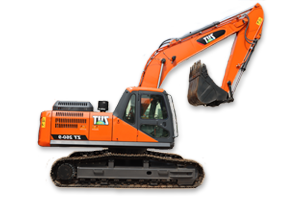
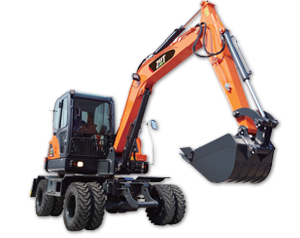
In recent years, with the gradual improvement of industrialization level, excavator is no longer just a single earth moving tool. Excavators are becoming more and more widely used in large-scale projects such as water conservancy, electric power, highways and railroads. As a multifunctional tool, excavators are considered to bring great benefits to various industries and promote the development of enterprises and industries. In water conservancy projects, excavators can be used to build dams in the waters of rivers, lakes and reservoirs, which have the advantages of high efficiency, large operation area and high automation, providing an effective means for the development and utilization of water resources. In electric power engineering, excavators can be used to dig cable trenches, build substations, install cable pipelines, etc. The excavator has the characteristics of rapid operation and good stability, which can effectively improve the construction efficiency of electric power engineering. Excavators are also widely used in road and railroad projects. Excavators can be used to excavate roadbeds, stations and bridges and other construction, with the advantages of large operating depth and wide operating range, providing important technical support for the construction of highways and railroads. In addition to the above-mentioned engineering fields, excavators also have a wide range of applications in agriculture, mining, light industry and environmental protection. In the field of agriculture, excavators can be used to reclaim land, dig deep roots, and make the whole field, etc. In the field of mining, excavators can be used for mining, digging coal, digging copper ore, etc. In the field of light industry, excavators can be used to excavate and adjust sewers, sewage treatment equipment, etc., with the advantages of operating depth and large processing capacity. In the field of environmental protection, excavators can be used for dredging rivers, sludge pond cleaning, garbage disposal and environmental management, etc., providing reliable technical support for urban environmental protection. It can be seen that excavators have a wide range of applications in various fields, providing good overall support for the whole industry. With the continuous development of science and technology and the increasing improvement of excavator technology, the application fields of excavators will be more extensive, and excavators will become an important tool for the future development of enterprises and industries.

Read more> 2023-04-01
Seven solutions for mini excavator holding the car

I. Air filtration and clogging Clogged air filter will lead to poor air intake, because the increase of frictional resistance will reduce the total gas flow, resulting in insufficient engine drive. Therefore, the mini excavator should immediately clean the air filter of the diesel engine or remove the dust on the paper filter, and replace the filter in serious cases. Second, the exhaust pipe is blocked And the air filter is clogged, in turn the clogging of the exhaust pipe will lead to poor air outlet. The higher the specific oxygen content of carbon dioxide, the lower the efficiency of gasoline and diesel fuel, and the output of working capacity will be reduced. So, usually, we should also check the carbon in the exhaust pipe and remove it on time to make the intake and exhaust pipes clear. III. Non-compliance management of oil supply advance angle Too large or too small supply advance angle will lead to unstable pumping time of gasoline pump, and it is impossible to ignite to output full mechanical energy. If you find that the angle of oil supply angle provided is not in compliance, you need to check whether the tightening head screw of the oil pump swivel is loose; if it is loose, check the angle of advance again and tighten the screw. IV. Piston rod and cylinder liner damage Due to the piston rod and cylinder liner parts bruised or damaged seriously, increasing the transmission loss of driving force in the whole process, reducing the mechanical energy output, leading to damage and improvement of the mechanical equipment itself to the car engine. At this time, the piston rod, cylinder liner and engine piston should be removed and replaced, and more attention should be paid to this component in daily work. V. Diesel system abnormalities 1. The gas entering the gasoline filter or pipeline not only endangers the quality of gasoline and diesel fuel, but also leads to poor oil circuit and difficulty in ignition. In this case, the gas in the pipeline should be excluded and the air filter should be cleared. 2. Damaged oil pump parts lead to small ignition advance angle, oil leakage and poor atomization, which are very likely to cause cylinder shortage. When such common failures are found, the parts must be cleaned and the damaged parts replaced. 3. Insufficient oil provided by the diesel pump will also lead to low engine displacement. In this case, again adjust the oil provided by the diesel pump, or check, repair and replace parts. Six, lubrication and cooling system abnormalities Abnormal intake system or cooling system will cause high temperature and oil temperature, which will easily lead to diesel engine combustion, and then lead to common failures such as piston rod position jamming. Therefore, when the diesel engine is hot, the lubrication and refrigeration system, including the cooling tower and heat pipe radiator, should be inspected to remove scale, maintained or replaced. VII. Common faults of cylinder head assembly 1. Due to the exhaust pipe leakage, organic exhaust gas enters resulting in low air volume or low air index, resulting in inadequate gas and diesel ignition, which not only consumes a lot of oil, but also causes incomplete mechanical energy conversion. At this time, check the cylinder and the cylinder seat mating surface, or replace the new parts to improve its air tightness. 2. cylinder head and the whole body of the tight connection is not tight, very easy to cause external steam into the water or main oil circuit, or cooling circulating water into the car engine interior. If not found immediately, it will cause "slippage" or exhaust pipe black smoke, so that the car engine drive power is not enough. Therefore, at this time should be careful to tighten the screws or replace the cylinder head. 3. Valve is too large or cylinder torsion spring brittle easily cause cylinder leakage, natural gas will reduce the gas-diesel ignition is not sufficient, reduce engine displacement. Therefore, it is necessary to check the cylinder position or replace the fragile cylinder torsion spring. 4. Injection pump mounting hole leakage or copper gasket damage will lead to the lack of cylinders and driving force of the car engine. It should be removed for maintenance and the damaged parts should be replaced. If the seepage temperature is too low, it will lead to the expansion of the exhaust heat damage. In this case, the temperature should be adjusted has reached the required standard value. In fact, the cause of mini excavator truck can be summarized as two reasons:The air inlet and outlet is not smooth. Check each part from two levels of the air inlet and air outlet of the car engine, and differentiate according to whether the sound of each part is normal or not. Naturally, the most important thing is the routine cleaning, maintenance and replacement of the parts. Each component is physically and mentally healthy. Of course, your car engine will be full of driving force.

Read more> 2023-03-31
Selection and installation of hydraulic oil tank

1. Selection of hydraulic oil tank The main function of the hydraulic oil tank in the hydraulic system is to store oil, dissipate heat, separate the air contained in the oil and eliminate foam. The capacity of the fuel tank must first be considered when selecting a fuel tank. Generally, the maximum flow rate of the pump is 2 to 3 times for mobile equipment, and 3 to 4 times for fixed equipment; secondly, the oil level of the fuel tank should be considered. When all the hydraulic cylinders of the system are extended, the oil level of the fuel tank should not be low. When the oil cylinder is retracted, the oil level should not be higher than the maximum oil level. Finally, considering the structure of the fuel tank, the partition in the traditional fuel tank cannot play the role of sedimentation of dirt, and a vertical partition should be installed along the longitudinal axis of the fuel tank. There is a gap between one end of the partition and the end plate of the oil tank to connect the space on both sides of the partition. The oil inlet and outlet of the hydraulic pump are arranged on both sides of the partition at the disconnected end, so that the distance between the oil inlet and the oil return is the farthest. The hydraulic oil tank plays more role in cooling. 2. Installation of hydraulic oil tank According to different installation positions, it can be divided into top-mounted, side-mounted and bottom-mounted. The upper-mounted oil tank installs the hydraulic pump and other devices on the upper cover with better rigidity. It has a compact structure and is the most widely used. In addition, cooling fins can be cast on the oil tank casing to enhance the cooling effect, that is, to increase the service life of the hydraulic pump. The side-mounted fuel tank is to install the hydraulic pump and other devices next to the fuel tank. Although it occupies a large area, it is very convenient to install and maintain. It is usually used when the system flow and fuel tank capacity are large, especially when one fuel tank is used for multiple hydraulic pumps. Used when supplying oil. Because the oil level of the side-mounted oil tank is higher than the oil suction port of the hydraulic pump, it has better oil absorption effect. The lower oil tank is to place the hydraulic pump under the oil tank, which is not only convenient for installation and maintenance, but also greatly improves the suction capacity of the hydraulic pump.

Read more> 2023-03-25
What is a torque converter?

The hydraulic torque converter is also called "hydraulic torque converter", "turbine torque converter" and "hydraulic torque converter". A type of hydraulic transmission component. It consists of pump wheel, turbine and guide wheel. The pump wheel is connected with the drive shaft, and can convert the mechanical energy input by the drive shaft into the kinetic energy and pressure head of the liquid by virtue of the centrifugal force for the turbine to do work. The turbine is connected with the driven shaft, and can output the kinetic energy of the liquid and the energy contained in the pressure head through the driven shaft. The hydraulic torque converter consists of three basic components: the pump wheel, the turbine wheel, the guide wheel and the torque converter housing. 1. pump wheel It is the active component of the hydraulic torque converter, and it is made (or welded) into one body with the torque converter housing. The torque converter housing assembly is fixed on the flange at the rear end of the crankshaft of the engine with bolts and rotates with the crankshaft. Inside the impeller there is a series of radially backward curved blades to give the working fluid an extra acceleration and additional energy. The inner edges of the vanes are fitted with guide rings that allow transmission oil to flow smoothly. 2. turbine The turbine is the driven element of the torque converter, which is splined to the input shaft of the planetary gear transmission, absorbs kinetic energy from the moving fluid and converts the kinetic energy into rotational kinetic energy. Like a pump wheel, a turbine has many blades. but: (1) There are more turbine blades than pump blades to improve transmission efficiency. (2) The bending direction of the turbine blades is opposite to that of the pump impeller blades, that is, relative to the clockwise rotation direction, all the blades are bent forward. The turbine blades are placed opposite to the pump impeller blades with a small gap between them. Between the pump wheel and the turbine, the oil flow direction is suddenly changed to reduce vibration loss. 3. guide wheel It is located between the pump wheel and the turbine and is the reaction element of the hydraulic torque converter. It is installed on the guide wheel sleeve (connected to the transmission housing) through a one-way clutch. It is used to control the return of liquid from the center of the turbine back to the middle of the pump wheel, that is, to change the direction of the liquid flow from the turbine back to the pump wheel. Because the turbine blades are curved, the flow changes direction as it leaves the turbine, and as the flow re-enters the center of the impeller, its direction causes a tendency to slow down the rotation of the liquid. The guide wheel changes the direction of the oil flow from the turbine back to the pump wheel, causing it to hit the back of the pump wheel blades, giving the pump wheel an extra "boost force", which plays a key role in the torque converter torque amplification stage . 4. case There are two types of hydraulic torque converter housings: assembled (detachable) and welded (non-detachable). The assembled shell, that is, the shell is made into two halves and connected together with bolts, which is detachable. It is easy to maintain, and the balance accuracy is not high, so it is used in occasions with low speed. For example, the large-size hydraulic torque converter used in heavy-duty trucks will affect its balance after disassembly and inspection.

Read more> 2023-03-24
what is hydraulic oil

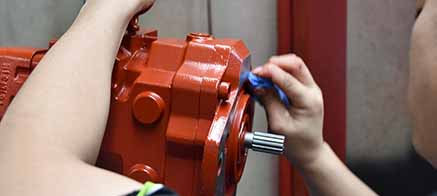
Hydraulic oil is the hydraulic medium used in hydraulic systems that utilize liquid pressure energy. It plays the roles of energy transmission, anti-wear, system lubrication, anti-corrosion, anti-rust, cooling, etc. in the hydraulic system. For hydraulic oil, it should first meet the requirements of the hydraulic device on the liquid viscosity at the working temperature and the starting temperature. Since the viscosity change of the lubricating oil is directly related to the hydraulic action, transmission efficiency and transmission accuracy, the viscosity-temperature performance of the oil is also required. And shear stability should meet the various demands put forward by different uses. There are many kinds of hydraulic oils, and the classification methods are different. For a long time, it is customary to classify them by use, and some are classified by oil type, chemical composition or flammability. These classification methods only reflect the income of oil products, but they are not systematic, and it is difficult to understand the relationship and development of oil products. Biodegradable hydraulic oil is developed to meet environmental protection requirements and control environmental pollution. There are mainly vegetable base oils and synthetic vinegar. Vegetable oils are the main development direction of environmentally friendly lubricants due to their natural biodegradability, excellent lubricating properties, and viscosity-temperature properties, as well as abundant resources and relatively low prices. This kind of hydraulic oil has no official product hydraulic oil in our country. However, there are many abroad, such as Ruianbo in the United States, which are formulated from vegetable oil base oils and can eventually degrade. Biodegradable hydraulic oil is an anti-wear hydraulic oil with excellent performance, which is specially formulated to meet the requirements of various hydraulic equipment. These products extend oil/filter life and provide maximum equipment protection, reducing maintenance and product disposal expenses. This series of products is jointly developed with major equipment manufacturers, which can meet the strict requirements of high hydraulic pressure and high output pumps in the precision hydraulic system of the device, and can also cope with other components of the hydraulic system, such as low-clearance servo valves and high-precision CNC machine tools, etc. strict requirements. This series of products widely meet the most stringent performance requirements of various hydraulic system and component manufacturers designed with multi-metallurgical technology, and a single product has outstanding performance characteristics.

Read more> 2023-03-23
Quality requirements for hydraulic oil

The hydraulic systems of automobiles and construction machinery use hydraulic oil as the working medium. The flow rate of the oil in this type of hydraulic system is low and the pressure is high, so it is called hydrostatic transmission. The quality of hydraulic oil will greatly affect the reliability and service life of the hydraulic system. Generally, the quality requirements for hydraulic oil are as follows: 1) Appropriate viscosity and good viscosity-temperature performance to ensure accurate and sensitive power transmission under the condition of changing working temperature, and to ensure the normal lubrication of hydraulic components. 2) It has good rust resistance and oxidation stability, and is not easy to oxidize and deteriorate under high temperature and high pressure conditions, and has a long service life. 3) It has good anti-foaming properties, so that the foam produced by the oil is easy to disappear under the working condition of continuous mechanical stirring, so that the power transmission is stable and the accelerated oxidation of the hydraulic oil is avoided.

Read more> 2023-03-18