your location:
home>news
Excavator working device

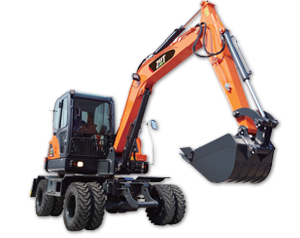
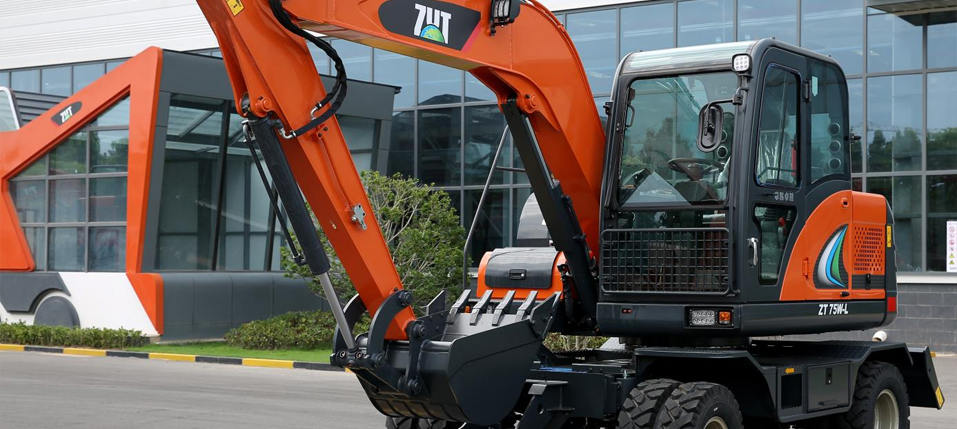
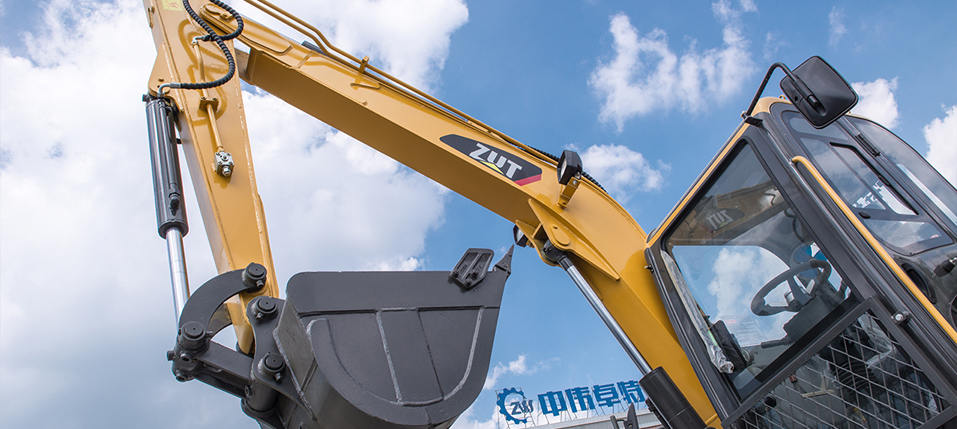
The working device is the main component of the hydraulic excavator. At present, the SY series excavator is equipped with a backhoe working device, which is mainly used to excavate the soil below the parking surface, but it can also excavate the soil below the maximum cutting height. In addition to ditching and loading, it can also perform simple field leveling work. The excavation operation is suitable for excavating the soil of grade Ⅰ~Ⅳ, and the hydraulic hammer or blasting method is required for the above grade Ⅴ. The backhoe working device is composed of boom, stick, bucket, rocker, connecting rod and hydraulic pipelines of the working device including boom cylinder, stick cylinder and bucket cylinder.

Read more> 2022-08-29
Basic knowledge of excavators

1. Excavators are fixed assets with large economic investment. In order to increase their service life and obtain greater economic benefits, the equipment must be assigned personnel, machines, positions, and responsibilities. When the post must be transferred, the equipment should be disclosed. 2. After the excavator enters the construction site, the driver should first observe the geology of the working face and the surrounding environment. There should be no obstacles within the excavator's rotation radius to avoid scratches or damage to the vehicle. 3. After the machine is started, no one is allowed to stand in the bucket, on the shovel arm and on the crawler to ensure safe production. 4. When the excavator is working, it is forbidden for any person to stay or walk within the radius of gyration or under the bucket. Non-drivers are not allowed to enter the cab to tamper with, and do not train drivers to avoid damage to electrical equipment. 5. When the excavator is relocated, the driver should observe and whistle first, and then relocate to avoid safety accidents caused by someone beside the machine. The relocated position should ensure that the space of the excavator's rotation radius is free of any obstacles, and illegal operations are strictly prohibited. 6. After the work is completed, the excavator should be moved away from the low-lying place or the edge of the trench (ditch), parked on the flat ground, and the doors and windows should be closed and locked. 7. The driver must do a good job in the daily maintenance, inspection and maintenance of the equipment, keep a good daily record of the equipment in use, find that there is a problem with the vehicle and cannot operate with illness, and report the repair in time. 8. The cab must be clean and tidy, and the surface of the car body should be kept clean, free of dust and oil; after work, develop the habit of cleaning the car. 9. The driver should make a record of the daily shift in time, make statistics on the work content of the day, complete the formalities for the part-time workers or zero items outside the project in a timely manner, and make a record for the checkout. 10. Drivers are strictly prohibited from drinking at noon and driving under the influence of alcohol during the work period. If found, they will be given financial penalties and the economic losses caused will be borne by themselves. 11. For human-caused vehicle damage, it is necessary to analyze the reasons, find out the problems, distinguish the responsibilities, and impose economic penalties according to the severity of the responsibilities. 12. It is necessary to establish a high sense of responsibility, ensure safe production, conscientiously do a good job in communication and service with the construction party, improve bilateral relations, establish a good work style, and work hard for the development and efficiency of the enterprise. 13. Excavator operation is a special operation, and a special operation license is required to drive an excavator. 14. Maintenance is to follow maintenance taboos.

Read more> 2022-08-27
Reasons for excavators to skip gears

(1) Wear of the speed change transmission mechanism The W4-60 excavator adopts a mechanical shift transmission mechanism, which relies on the sliding tooth sleeve to move axially on the fixed tooth sleeve and is connected with the driven gear of each gear. engaged to achieve shifting. In the frequent shifting process, the tooth end faces of the above-mentioned meshing gears are easily ground into a conical shape, which reduces the meshing performance and leads to "jumping gears". (2) The performance of the self-locking mechanism is degraded. In order to prevent the transmission from "jumping", this type of excavator is installed in the box cover holes above the fork shafts of the Ⅱ, Ⅲ and Ⅳ and Ⅴ gears of the transmission and in the Ⅰ and reverse shift forks. There are steel balls and springs that play a self-locking role. When the elasticity of the spring that plays the role of positioning and self-locking is weakened or broken, the self-locking performance of the self-locking mechanism will decrease until it disappears, causing the transmission to "jump". At the same time, if the groove on the positioning steel ball or the fork shaft is worn, it can also cause the transmission to "jump". (3) Improper adjustment of the shifting device The transmission of this type of excavator adopts a mechanical manual shifting method. If the shifting lever, vertical axis, horizontal axis and vertical fixing screws are loose, the transmission can also "jump". (4) Sudden change of external load Due to the working nature of the excavator and the design of the machine itself, the sudden change of the external load will also cause its transmission to "jump". When the road surface is uneven, the machine is driving downhill or the driving route is improper and the external load changes suddenly, the sudden change of the load will act on the gear meshing gear of the transmission through the wheels and drive shaft, so that the gear meshing gear Disengagement due to axial thrust, causing the transmission to "jump". (5) Improper operation method When the excavator is driving on a slope (especially driving downhill), if the operation is improper, it will also cause the transmission to "jump".

Read more> 2022-08-27
Preventive measures for excavator skipping

(1) Operate in strict accordance with the operating procedures and driving essentials, and try to avoid "beating teeth" when shifting gears to reduce the wear of the gear pair. (2) Strictly implement the maintenance system and strengthen the maintenance of the shifting device. When the lever system of the shift device is not connected properly, it should be adjusted in time to ensure the good performance of the shift device. (3) Pay attention to the repair and maintenance of the self-locking mechanism. The positioning steel balls, springs and fork shafts with reduced positioning effect or loss of positioning efficiency should be repaired or replaced in time to keep the self-locking performance of the self-locking mechanism in a good state. . (4) When assembling the transmission, it should be operated in strict accordance with the operating procedures to ensure that the various parts of the transmission are properly adjusted and tightened properly. On a large downhill road, the driver should strictly follow the downhill action essentials, and must not violate the regulations.

Read more> 2022-08-27
The composition and function of excavator power system

Air intake system - grille → hose → air filter → hose → supercharger → hose → intercooler → hose → engine Exhaust system - supercharger → expansion joint → muffler → exhaust pipe Cooling system - water tank→hose→thermostat→water pump→diesel engine→hose→water tank Throttle control system - stepper motor → reducer → worm gear drive → throttle cable → diesel throttle - high idle speed, low idle speed limit switch Fuel System-- Oil inlet system: fuel tank → hose → hand pump → coarse filter → fine filter → diesel engine Oil return system: diesel engine → hose → fuel tank (the amount of oil returned is relatively large, use it for partial cooling)

Read more> 2022-08-26
Classification of excavators

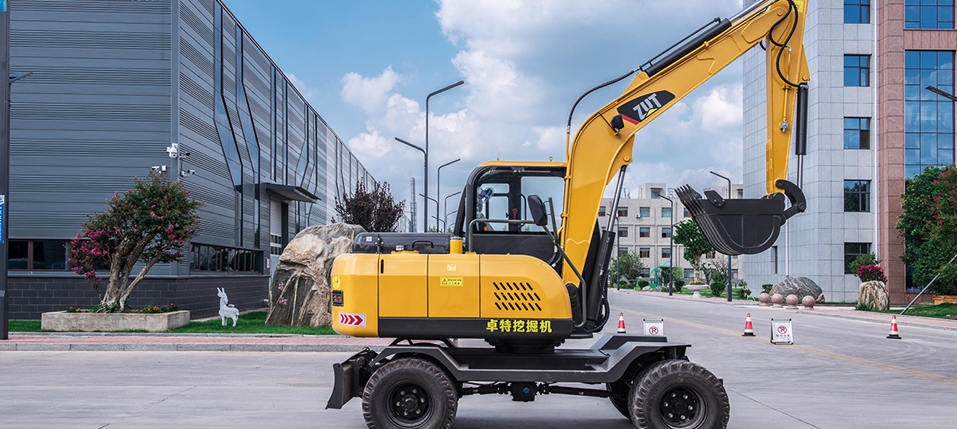
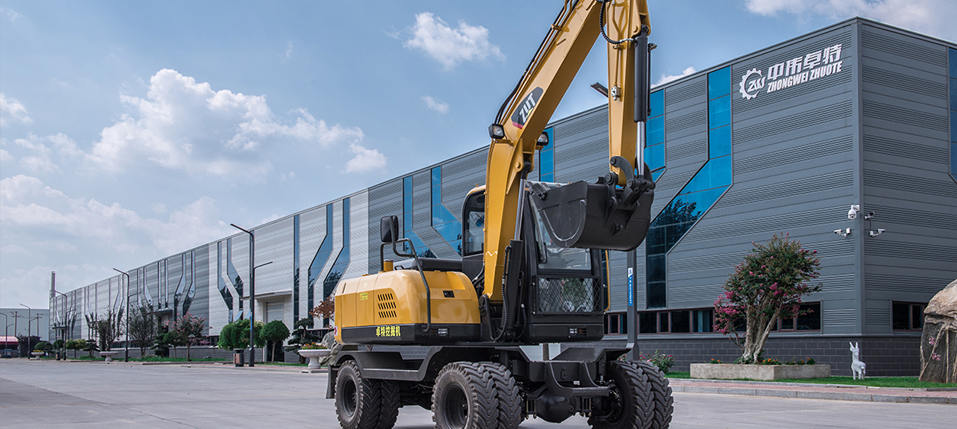
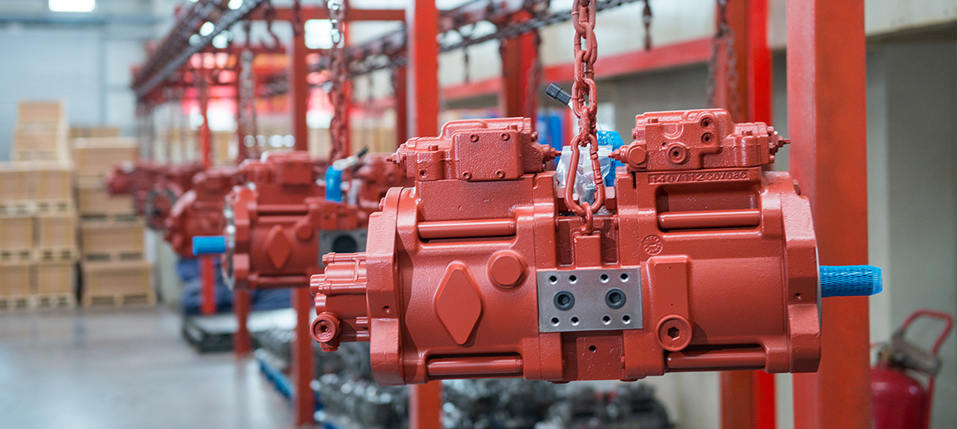
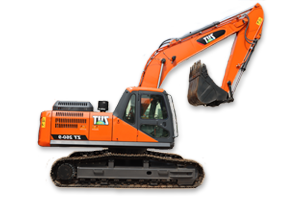
Common excavators are divided into two types: internal combustion engine-driven excavators and electric-driven excavators. Among them, electric excavators are mainly used in plateau hypoxia, underground mines and other flammable and explosive places. According to different sizes, excavators can be divided into large excavators, medium excavators and small excavators. According to different walking modes, excavators can be divided into crawler excavators and wheeled excavators. According to the different transmission modes, excavators can be divided into hydraulic excavators and mechanical excavators. Mechanical excavators are mainly used in some large mines. According to the purpose, excavators can be divided into different categories such as general excavators, mining excavators, marine excavators, and special excavators. According to the bucket, excavators can be divided into front shovel, backhoe, dragline and grab shovel. Front shovels are mostly used to excavate materials above the surface, and backhoes are mostly used to excavate materials below the surface. 1. backhoe excavator The backhoe is the most common we've seen, a back-down, forced cut. It can be used for excavation below the shutdown working surface. The basic operation methods are: ditch end excavation, ditch side excavation, straight line excavation, curved excavation, excavation with a certain angle, ultra-deep trench excavation and trench slope excavation. 2. Front shovel excavator The shovel action form of a front shovel excavator. Its characteristics are "forward and upward, forced soil cutting". The front shovel has a large digging force and can excavate the soil above the stop surface. It is suitable for excavating dry foundation pits with a height of more than 2m, but up and down ramps must be set up. The bucket of the front shovel is larger than that of the backhoe excavator of the same equivalent, and it can excavate the first to third types of soil with a moisture content of not more than 27%, and cooperate with the dump truck to complete the entire excavation and transportation operation, and can also excavate the soil. Large dry foundation pits and mounds, etc. The excavation method of the front shovel is based on the difference between the excavation route and the relative position of the transport vehicle. There are two ways of digging and unloading: forward digging and side unloading; forward digging and reverse To unload soil. 3. Dragline excavator Draglines are also called draglines. The characteristics of its excavation are: "backward and downward, cutting the soil under its own weight". It is suitable for excavation of Class I and II soils below the stop surface. When working, the bucket is thrown out by inertial force, and the digging distance is relatively large, and the digging radius and digging depth are large, but it is not as flexible and accurate as the backhoe. Especially suitable for excavating large and deep foundation pits or underwater excavation. 4. Grab and Shovel Grab excavator is also called grab excavator. The characteristics of its excavation are: "straight up and down, cutting the soil under its own weight". It is suitable for excavation of Class I and II soils below the stop surface, and is often used for excavation of foundation pits and caissons in soft soil areas. It is especially suitable for digging deep and narrow foundation pits, dredging old channels, excavating silt in water, etc., or for loading loose materials such as gravel and slag. There are two types of excavation: trench side excavation and positioning excavation. If the grab is made into a grid, it can also be used for loading ore blocks, wood chips, wood, etc. in the log yard. The vast majority of today's excavators are fully hydraulic azimuth excavators. Hydraulic excavators are mainly composed of engine, hydraulic system, working device, traveling device and electrical control. The hydraulic system consists of hydraulic pump, control valve, hydraulic cylinder, hydraulic motor, pipeline, fuel tank, etc. The electrical control system includes monitoring panel, engine control system, pump control system, various sensors, solenoid valves, etc. Hydraulic excavators are generally composed of three parts: working device, upper body and lower body. According to its structure and use, it can be divided into: crawler type, tire type, walking type, full hydraulic, semi-hydraulic, full rotation, non-full rotation, general type, special type, articulated type, telescopic boom type and other types. The working device is the device that directly completes the excavation task. It is hinged by three parts: boom, stick and bucket. In order to meet the needs of various construction operations, hydraulic excavators can be equipped with a variety of working devices, such as excavation, lifting, loading, leveling, clamps, bulldozing, impact hammer, rotary drilling and other working equipment. The slewing and traveling device is the body of the hydraulic excavator, and the upper part of the turntable is provided with a power device and a transmission system. The engine is the power source of the hydraulic excavator, most of which use diesel oil in a convenient place, and can also use an electric motor instead. The hydraulic transmission system transmits the power of the engine to the hydraulic motor, hydraulic cylinder and other actuators through the hydraulic pump, and pushes the action of the working device to complete various operations.

Read more> 2022-08-26
<< ···7891011··· >> 9/23