
your location:
home>news
What are the types of excavators, do you know?

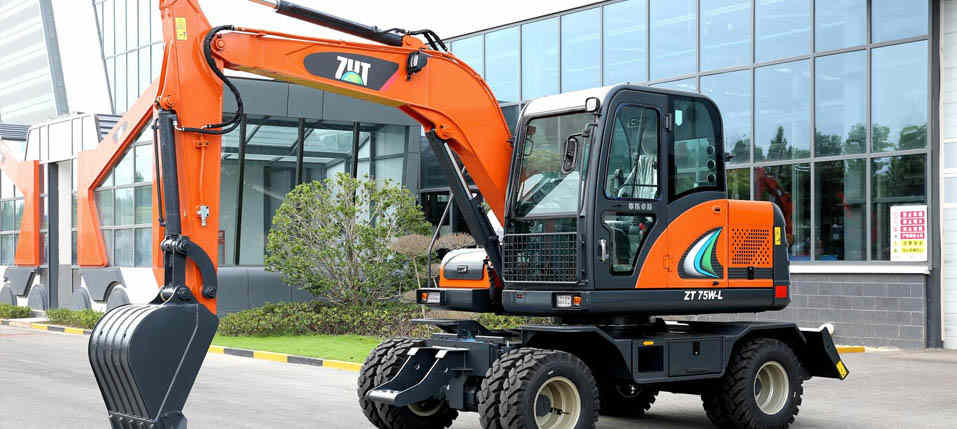
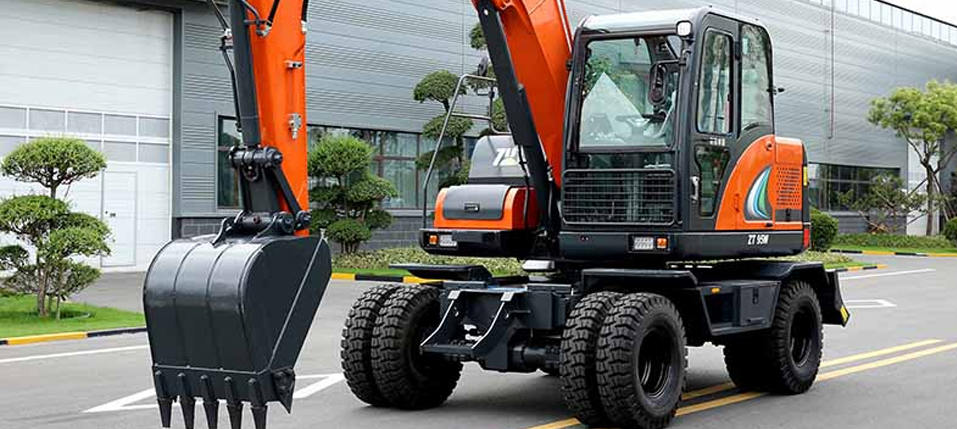
An excavator is a common earth excavation machine in the engineering field. Its main job is to dig material above or below the floor surface with a bucket and load it into a transport vehicle or a stockyard. It can be roughly divided into the following categories: 1. backhoe excavator The backhoe is our most common and most commonly used type of excavator. It can be used for excavation below the floor of the shutdown working surface, and it is not easy to excavate the part above the shutdown working surface. Basic operation methods include: excavation at ditch end and ditch side, straight line, curve excavation, excavation at a certain angle, ultra-deep trench excavation, etc. 2. Front Shovel Excavator The characteristic of the shovel action form of the front shovel is "move forward and cut soil upward". The excavation force of the shovel is relatively large, and it can excavate above the shutdown surface, but cannot excavate the part below the shutdown working surface. It should be applied to dry foundation pits with an excavation height of more than 2m, but up and down ramps must be set. The main shovel bucket is larger than similar backhoe excavators, and it can excavate the first to third types of soil with a water content of no more than 27%. The entire excavation and transportation can be completed with the unloading truck, and it can also excavate large dry foundation pits and level them. mound. According to different transport vehicles and excavation routes, there are different excavation and unloading methods. 3. Dragline Excavator Dragline is also called cable shovel excavator. Its excavation features are: "retreat downward, cut soil by self-weight". It is used for the excavation of Class I and II soils below the floor of the shutdown operation face. When working, the bucket is thrown out by inertial force, and the excavation is relatively far away, and the excavation radius and excavation depth are relatively large, but it is not as flexible and accurate as the backhoe. It is especially suitable for large and deep foundation pit excavation or underwater excavation. 4. grab shovel excavator The grab shovel is also called grab excavator. Its excavation is characterized by "straight up and down, self-weight cutting". It is suitable for the excavation of Class I and II soils below sea level on the floor of the shutdown operation surface. It is often used for the excavation of foundation pits and caissons with soft soil, especially for excavation of deep and narrow foundation pits and dredging of old channels. And water silt excavation, etc., or used for loading loose materials such as gravel, sand, grain, etc. in the seaport, and loading ore, wood chips, wood, etc. in the wood storage yard.
Read more> 2022-11-18
What are the uses of an excavator? What exactly can be done!

1. Digging ditches Excavators can help people dig ditches and bury pipes, ditches and channels, it's all possible! 2. Digging building foundations Excavators are used to build houses and foundations on construction sites! 3. Can dig fish ponds, shrimp ponds Many other fish and shrimp breeders will use excavators to dig ponds! 4. Can be used to demolish houses Many abandoned houses, old houses are no longer in use and need excavators to break down and demolish them! 5. Excavators can be used as cranes Many places need to transport large objects over short distances, and when it is inconvenient to use a crane, the excavator will be used instead! 6. Can also be used to repair slopes, slope protection In many places, excavators are used to brush the slopes when repairing river banks! The excavator is still quite a lot of uses, you know there are other uses?

Read more> 2022-11-16
Excavator model and bucket capacity

The model is 35, that is, the bucket capacity of 3.5 tons is about 0.11 cubic meters. The model is 60, that is, the bucket capacity of 6 tons is about 0.3 cubic meters. The model is 120, that is, the bucket capacity of 12 tons is about 0.5 cubic meters. The model is 160, that is, the bucket capacity of 16 tons is about 0.65 cubic meters. The model is 200, that is, the 20-ton bucket capacity is about 0.8 cubic meters. The model is 220, that is, the bucket capacity of 22 tons is about 1.1 cubic meters. The model is 240, that is, the 24-ton bucket capacity is about 1.2 cubic meters. The model is 270, that is, the 27-ton bucket capacity is about 1.5 cubic meters. The model is 300, that is, the bucket capacity of 30 tons is about 1.6 cubic meters. The model is 400, that is, the bucket capacity of 40 tons is about 1.9 cubic meters. The model is 450, that is, the 45-ton bucket capacity is about 2.1 cubic meters. The above generally refers to the different models of various brands of excavators for natural excavation and stacking. PC200-8, PC stands for Komatsu excavator series 200 stands for 20-ton class, -8 stands for the algebra of innovation. Carter 306, 3 represents the Carter excavator series, 06 represents the 6-ton class, and the new generation is represented by ABCD.

Read more> 2022-08-29
Differences between scrapers, loaders, bulldozers and excavators

Loaders are generally seen in seaports and logistics centers, mainly for loading and unloading containers. The grader is used to level the road, remove snow, bulldoze, loosen the soil, etc. The excavator is a common construction machinery, mainly used for digging soil, loading, demolition, digging, gravel and so on. Forklifts are mainly used to shovel soil and snow. The scope of loading is similar to that of excavators, but the operating conditions are limited and the efficiency is higher than that of excavators. Forklifts cannot operate in places with soft soil and steep ditches. Generally, forklifts are wheeled. style. Bulldozers are mainly used for dozing, leveling, and loosening, so in many developed places, you can see excavators and bulldozers working with each other, and the efficiency is very high. Scrapers, as the name suggests, are shoveling and transporting soil. Scrapers generally shovel soil in places with a lot of soil and put it in their "belly", and then go up to 500 meters to 2000 meters to unload the soil and put it on the soil where it is needed. The place. Loader is a self-propelled loading and unloading machine that loads bulk materials into vehicles or other equipment. The loader can also perform light excavation work, and can also perform operations such as bulldozing, lifting, loading and unloading wood and steel pipes by replacing the corresponding working devices. A scraper can be used as a loader, but a loader cannot be used as a scraper. Bulldozer A tractor-driven machine with a wide, blunt horizontal blade for clearing land, road structures, or similar work.

Read more> 2022-08-29
Excavator boom repair

When checking the rust cracks of the welding seam on the side plate of the excavator arm, it is necessary to scrape off or polish the surface paint layer and rust of the welding seam. When observing, tap the welding seam with a small hammer, and use a magnifying glass to observe if necessary. 1. Cause of cracks Reasons for cracks on the side plate of the excavator arm: including bubbles, slag inclusions and tiny cracks in the original weld. When the excavator is overloaded, tiny cracks will occur at the original weld and slowly expand: the welding rod Cracks that do not match the performance of the plate: Due to the large size of the excavator arm, it is difficult to adopt reliable and effective heating and heat preservation measures. During the operation, the vibration and impact are relatively large, and the uneven force at the welding seam causes the welding seam to crack. 2. Repair method Preparation work before welding: remove oil, paint, rust, etc. from the original weld crack with a hand grinding wheel. Use a gouging machine to cut off the weld crack, plan to the body of the side plate, and remove the hardened area of the base metal that was welded in the past. After planing, use an angle grinding wheel to smooth the incision (the inner interface is ground to form a V-shaped groove), after cleaning and pink inspection, confirm that all cracks have been found and removed. According to the existing maintenance conditions, choose Φ5mm type E5015 (J507) or E5016 (J506) electrode, bake at 350℃ for 2 hours, and then keep at 100℃ to prevent the electrode from absorbing moisture. 230A. Due to the large thickness of the side plate of the excavator, the welded part should be preheated to 150 ~ 250 ℃ before welding; during the welding process, the segmented, symmetrical and backward method can be used for welding; during the cooling process of the weld, it should be continuously used The hand hammer strikes the weld metal to relieve stress; when welding at the corner of the side plate, in order to avoid arc defects, continuous welding should be performed to improve the stress condition of the joint. After welding, thoroughly remove the spatter, welding slag and welding flash, and the residual height of the welding seam shall not be greater than 2.5mm. Magnetic particle inspection is carried out on the weld, and defects such as cracks are not allowed. 3. Weld corrosion prevention measures Thoroughly sand, derust and coat welds with anti-rust paint. At the excavation construction site, for the existing rusted welds, manual rust removal can be selected according to the actual situation. The disadvantage is that the labor intensity of workers is high and the labor cost is high; The main base is mixed with composite materials such as corrosion inhibitor, surface active agent, rust remover, rust inhibitor and film-forming agent to prepare a pickling solution with the functions of rust removal, rust prevention and primer. Rust removal and rust prevention purposes. In addition, during use, attention should also be paid to keeping the excavator in a clean and dry environment, maintaining good ventilation, and removing corrosive gases and moisture in time.

Read more> 2022-08-29
Structural composition and running gear of excavator

Common excavator structures include power devices, working devices, slewing mechanisms, operating mechanisms, transmission mechanisms, walking mechanisms and auxiliary facilities. The transmission mechanism transmits the power of the engine to the hydraulic motor, hydraulic cylinder and other actuators through the hydraulic pump, and pushes the working device to move, thereby completing various operations. walking device The walking device is the chassis, including the crawler frame and the walking system, which is mainly composed of the crawler frame, the walking motor + reducer and its pipeline, the driving wheel, the guide wheel, the carrier wheel, the roller, the crawler, and the tensioning buffer device. The function is to support the weight of the excavator, and convert the power transmitted by the driving wheel into traction, so as to realize the walking of the whole machine. The frame assembly (that is, the crawler walking frame assembly) is an integral welded part and adopts an X-shaped structure. Its main advantage is that it has a high bearing capacity. The frame assembly is welded by three parts: the left longitudinal beam (ie the left track frame), the main frame (ie the middle frame) and the right longitudinal beam (ie the right track frame). The weight of the frame assembly is 2 tons. The central rotary joint is a hydraulic component connecting the rotary platform and the oil circuit of the chassis. It ensures that after the rotary platform rotates at any angle, the travel motor can still distribute oil normally. The current rotary joint is 5-way. ​

Read more> 2022-08-29
<< ···678910··· >> 8/23